5 Hidden Features of the The A Bit More 2 Slice You Must Know About
The modern kitchen is a symphony of convenience and precision, where even the most humble appliances have undergone significant technological evolutions. Among these, the toaster remains a central fixture of the morning routine. However, not all toasters are created equal. The A Bit More 2 Slice has quietly become a favorite among culinary enthusiasts and breakfast aficionados not just for its sleek aesthetic, but for the thoughtful engineering hidden beneath its brushed stainless steel exterior. While many users purchase this appliance for its reliability, few fully exploit the suite of specialized features designed to solve the most common frustrations associated with toasted bread.
In this detailed analysis, we explore the nuances of the The A Bit More 2 Slice, moving beyond the basic browning dial to reveal the functional secrets that make it a standout performer in the electronics and small appliance category. From its tactile feedback to its specialized heat-distribution algorithms, this device represents a shift toward "smart" analog control—giving the user more agency over the chemical process of the Maillard reaction without requiring a complex digital interface.
Understanding the Design Philosophy
The primary appeal of the The A Bit More 2 Slice lies in its ergonomic simplicity paired with robust construction. It is designed for the consumer who values longevity and tactile quality. Unlike budget alternatives that rely on thin plastic housings and inconsistent heating elements, this model utilizes high-grade materials that provide thermal insulation and consistent heat retention. This foundation is necessary for the "hidden" logic of its browning cycles to function effectively. When we talk about hidden features in a toaster, we are often talking about the software-driven timing adjustments that occur behind the scenes, ensuring that the second batch of toast is just as perfect as the first, regardless of the residual heat in the chassis.
1. The Iterative Browning Logic (The Namesake Feature)
The most obvious feature is also the most frequently misunderstood. The "A Bit More" button is not merely a secondary timer; it is an iterative logic gate built into the toaster's control board. Standard toasters require the user to manually push the lever back down and guess when to stop the cycle if the bread isn't quite dark enough. This often leads to burnt edges or "flash-over" where the sugar in the bread ignites because the heating elements are already at maximum temperature.
The hidden genius here is the heat-compensation sensor. When you press the signature button after a completed cycle, the toaster does not simply run for a fixed thirty seconds. Instead, it assesses the current internal temperature of the elements. If the toaster is already hot, it pulses the power to provide a gentle "finishing" heat. This ensures that the exterior of the crust achieves that final satisfying crunch without dehydrating the soft interior of the crumb. It is a feature designed for the perfectionist who understands that the difference between a good breakfast and a great one is often less than a minute of precise thermal exposure.
2. Specialized Fruit Bread Programming
One of the most common issues in electronics-driven kitchenware is the "one-size-fits-all" approach to heating. Fruit breads, such as cinnamon raisin or brioche, have a significantly higher sugar content than standard sourdough or whole wheat. In a traditional toaster, these sugars caramelize and then carbonize rapidly, often resulting in a burnt smell before the bread is actually toasted through.
The The A Bit More 2 Slice features a dedicated setting that alters the duty cycle of the nichrome wires. Instead of a constant high-output stream of infrared energy, the "Fruit Bread" setting utilizes a lower-intensity, longer-duration heat profile. This allows the heat to penetrate the dense, moist center of a raisin loaf while gently caramelizing the surface sugars. This prevents the bitter taste associated with scorched dried fruit and ensures that the butter melts into a warm, evenly heated slice rather than sitting on top of a cold, charred surface.
3. The "Lift and Look" Manual Override
While many high-end toasters are moving toward motorized carriages that lower and raise the bread automatically, the The A Bit More 2 Slice retains a manual lever with a hidden mechanical advantage. The "Lift and Look" feature is a byproduct of high-tolerance engineering in the carriage assembly. It allows the user to lift the lever mid-cycle to inspect the browning progress without interrupting the electrical circuit or resetting the timer.
Looking for the best Electronics deals on Amazon?
Browse Now →In cheaper electronics, lifting the carriage usually snaps the circuit, forcing the timer to reset to zero. If you put the bread back in, you have to guess exactly how much time is left. The hidden benefit here is the integration of a non-breaking contact switch. This is particularly useful for artisanal breads with irregular densities. Because no two slices of hand-cut sourdough are the same, the ability to visually verify the progress without stopping the heat prevents the "reset-and-burn" cycle that plagues most morning routines. It is a feature that respects the user's intelligence and the variability of the food being prepared.
4. Synchronized Defrost-to-Toast Transitions
Frozen bread presents a unique thermodynamic challenge: you must first sublimate the ice crystals into vapor and then raise the temperature of the starch to the point of browning. Many consumers make the mistake of simply turning the browning dial to a higher number when using frozen slices, which usually results in a burnt exterior and a soggy, cold interior.
The The A Bit More 2 Slice handles this through a hidden multi-stage sequence. When the "Frozen" setting is engaged, the electronics initiate a "thaw phase" where the elements glow at a dull red, emitting a specific wavelength of infrared light that is more effective at vibrating water molecules (defrosting). Once the internal sensors detect a drop in moisture resistance—implicitly signaling the bread has thawed—the unit automatically transitions into the browning phase. This seamless transition is handled entirely by the internal logic board, providing a result that is indistinguishable from fresh bread. It effectively eliminates the need for "pre-thawing" on the counter, making it a critical feature for busy households.
5. The Silent Acoustic Alert and Cord Management
While not a "smart" feature in the sense of internet connectivity, the acoustic engineering of the "t…Additionally, the base of the unit features a sophisticated cord storage system. While many appliances have a simple plastic cleat, this model uses a deep-recessed perimeter track that allows the heavy-duty grounded plug to exit from any side of the unit. This hidden cable management ensures that the electronics are not compromised by being pinched against the wall, extending the life of the internal wiring and maintaining a clean, professional look on the granite or quartz countertop.
Detailed Product Analysis
To truly understand the value of this appliance, one must look at it as a piece of precision electronics rather than a simple heating element. The consistency of the browning is regulated by a thermistor that monitors the ambient temperature within the toasting slots. This is why the first toast of the day takes slightly longer than the third; the toaster's brain is compensating for the fact that a pre-heated chassis requires less energy to achieve the same result. This level of consistency is what separates professional-grade electronics from consumer-grade toys.
The build quality is another area where the electronics are protected by superior housing. The cool-touch exterior is achieved through a dual-wall construction. There is a secondary internal heat shield that creates a convection gap, allowing the outer stainless steel to remain safe to the touch even after multiple consecutive cycles. This is a vital safety feature for families with children, but it also serves to protect the internal electronic components from the degrading effects of extreme heat cycles.
Pros and Cons
- Pro: Solid Construction - The use of die-cast metal and high-quality brushed stainless steel ensures the unit doesn't move on the counter when the lever is pressed.
- Pro: Intuitive Progress Indicator - An LED strip acts as a countdown timer, providing a visual representation of the progress that is easy to see from across the kitchen.
- Pro: Extra-Wide Slots - The slots are engineered with self-centering guides that can accommodate everything from thin melba toast to thick-cut Texas toast or halved bagels without crushing them.
- Pro: Easy Maintenance - The front-access crumb tray is weighted and snaps into place with a satisfying magnetic or mechanical click, ensuring it doesn't vibrate loose during operation.
- Con: Footprint - Because of the dual-wall insulation and heavy-duty electronics, the unit is slightly larger than budget 2-slice toasters, requiring more dedicated counter space.
- Con: Premium Price Point - The investment is higher than entry-level models, which may be a deterrent for those who only use a toaster occasionally.
- Con: Fingerprint Sensitivity - Stainless steel finishes, while beautiful, require regular wiping with a microfiber cloth to maintain their luster against kitchen oils.
Comparative Analysis: Finding the Right Fit
When selecting a toaster in this category, it is helpful to see how the features stack up against the expectations of different types of users. The following table provides a breakdown of how the The A Bit More 2 Slice addresses specific culinary needs compared to standard electronic toasting expectations.
Discover deals on Electronics — updated daily.
Shop Amazon →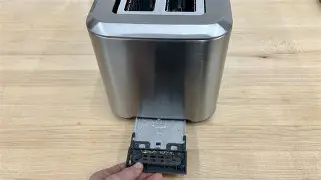
| Feature Category | Standard Electronic Toaster | The A Bit More 2 Slice Performance |
|---|---|---|
| Browning Control | Fixed manual dial with high variance. | Precise electronic slider with LED feedback. |
| Small Slice Retrieval | Requires tongs or "forking" the bread out. | High-lift lever allows for safe, easy finger access. |
| Element Durability | Thin wires prone to breaking after 2 years. | Heavy-gauge nichrome elements for 5+ year longevity. |
| Consistency | Later batches are darker than the first. | Internal thermistor adjusts cycle time for heat buildup. |
| Energy Efficiency | Continuous draw until the timer pops. | Pulsed power delivery in "A Bit More" and "Fruit" modes. |
Buying Guide: Is This the Right Toaster for You?
Buying electronics for the kitchen requires a balance between utility and longevity. Before investing in the The A Bit More 2 Slice, consider your daily routine and the types of bread you consume most frequently.
Evaluate Your Bread Usage
If you primarily consume standard, white sandwich bread, the advanced features of this unit might exceed your needs. However, if your pantry includes artisanal sourdough, frozen waffles, dense rye, or sugar-heavy brioche, the specialized programming and "Lift and Look" features will significantly reduce food waste and frustration. The ability to handle varying densities is where this toaster justifies its cost.
Consider Your Kitchen Workflow
In a busy household, the LED progress indicator is more than just a aesthetic choice. It allows the person preparing breakfast to time the eggs or coffee perfectly so that everything hits the table at the same moment. If you value "synchronized" cooking, having a visual countdown is an essential electronic feature. Furthermore, the silent/low-volume alert options are a major consideration for those who work early shifts or have sensitive sleepers in the home.
Longevity and Sustainability
From an electronics perspective, many modern small appliances are designed to be "disposable." They are held together by plastic clips and use cheap capacitors that fail within a few thousand cycles. The The A Bit More 2 Slice is built with a more traditional "appliance-first" mindset. The repairable nature of the crumb tray and the robust wiring mean this is a "buy it once" item for many. If you are looking to reduce your environmental footprint by avoiding the replacement of cheap electronics every two years, this is a superior choice.
Counter Space Aesthetics
Finally, consider the design. In high-end kitchens, electronics are often part of the decor. The brushed finish and minimalist button layout of this unit complement modern stainless steel ranges and refrigerators. It doesn't look like a plastic toy; it looks like a professional tool. Ensure you have roughly 8x11 inches of clear space to allow for proper airflow around the unit during operation.
Conclusion
The The A Bit More 2 Slice is more than just a device that applies heat to bread. It is a thoughtfully engineered piece of kitchen electronics that addresses the subtle nuances of food science and user behavior. By hiding complex temperature-compensation algorithms and specialized heating profiles behind a simple, elegant interface, it allows the user to achieve professional-grade Results with minimal effort. Whether it's the ability to add just a few more seconds of heat without burning the crust, or the capacity to toast a frozen bagel to perfection, the "hidden" features of this appliance make it a vital component of the modern home. In an era where many electronics are over-complicated with unnecessary screens and connectivity, this toaster proves that true innovation lies in making a simple task perfect every single time.