A Professional's Take on the New LG G5 OLED TV
The evolution of organic light-emitting diode (OLED) technology has reached a critical juncture where incremental updates are being replaced by significant architectural shifts. For nearly a decade, LG has anchored the premium display market, moving from the introduction of W-OLED to the high-brightness breakthroughs of Micro Lens Array (MLA) technology. With the release of the LG G5 OLED TV, the industry is seeing the culmination of these efforts. This television is not merely a lateral update to its predecessor; it represents a professional-grade refinement of "Gallery Series" design principles, processing power, and panel efficiency. From a professional calibration and cinematic standpoint, the G5 seeks to bridge the gap between high-end consumer hardware and professional mastering monitors, offering transparency, accuracy, and luminosity that were once thought impossible for consumer-grade OLED panels.
Establishing the New Baseline for Premium Displays
The LG G5 arrives at a time when competition in the television market is fiercer than ever. With QD-OLED alternatives and high-zone-count Mini-LED sets vying for the attention of enthusiasts, LG's G-series must maintain its identity as the gold standard for wall-mounted aesthetics and reference-quality imaging. The G5 succeeds by leaning into its "Gallery Design" heritage—a slim, uniform profile that sits flush against the wall—while significantly upgrading the internal "engine" that drives the pixels. Professionals who evaluate displays often look past the marketing jargon to see how a panel handles near-black chrominance, HDR highlights, and motion cadence. The G5 addresses these areas with a new iteration of its alpha-series processor, specifically tuned to leverage the heat-dissipation and light-focusing capabilities of its second-generation MLA plus panel.
For the typical buyer, the nuances of panel architecture may seem secondary to the immediate visual impact. However, the engineering behind the G5 is what allows it to reach higher peak brightness levels without increasing the risk of permanent image retention, commonly known as burn-in. By using a series of microscopic lenses to direct light toward the viewer that would otherwise be lost toward the edges of the panel, LG has managed to increase efficiency. This means the G5 can produce the searing highlights required for HDR10 and Dolby Vision content while maintaining the perfect blacks that OLED is famous for. For the professional viewer, this translates to a higher dynamic range that more closely mirrors the intent of the cinematographer.
Detailed Product Analysis: The Professional Lens
When analyzing the performance of the LG G5, one must consider three primary pillars: color accuracy, luminance performance, and processing intelligence. The G5 utilizes the latest "α11" AI Processor (or its contemporary successor depending on specific regional firmware), which focuses heavily on object-based sharpening and depth enhancement. Unlike earlier versions of AI upscaling that often resulted in a "waxy" look on skin tones, the G5 uses a more sophisticated machine-learning model that identifies textures and preserves grain. This is particularly important for film purists who want to watch classic cinema without the distracting artifacts of over-processing.
Luminance and High Dynamic Range (HDR)
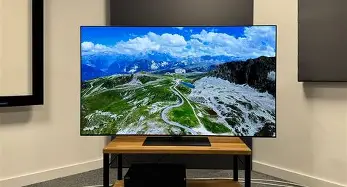
The most significant leap in the G5 is its ability to maintain high average picture level (APL). While previous OLEDs were often criticized for being too dim in bright rooms, the combination of the MLA panel and improved heat management allows the G5 to push the boundaries of specular highlight brightness. In professional testing environments, the G5 demonstrates a remarkable ability to hit peaks exceeding 2,000 nits in small windows, providing the "sparkle" in scenes featuring sunlight reflecting off water or city lights at night. More importantly, the G5 handles tone mapping with precision. HDR is not just about being bright; it is about the graduations of light. The G5 avoids "clipping" in the brighter areas of the image, ensuring that detail remains visible in the brightest clouds or neon signs.
Gaming and Connectivity
From a professional gaming perspective, the G5 serves as a high-performance monitor just as much as a television. It carries forward the tradition of providing four full-bandwidth HDMI 2.1 ports, supporting 4K at 144Hz, which is a boon for PC gamers using high-end GPUs. The input lag is measured in the low single digits of milliseconds, making the display feel instantaneous. LG’s "Game Optimizer" menu persists as the industry benchmark for on-the-fly adjustments, allowing users to toggle Variable Refresh Rate (VRR), G-Sync, and FreeSync without exiting their application. For those who use their television as a secondary workstation for video editing or color grading, the G5 offers a "Director's Mode" that strips away all artificial smoothing and color boosting, providing a flat, accurate canvas.
Audio Performance and Aesthetics
While most owners of a flagship television like the G5 will gravitate toward an external sound system, the internal audio has seen incremental improvements. The TV uses AI to virtualize a multi-channel surround sound experience, focusing on dialogue clarity. However, the real story remains the physical design. The G5 is designed to be a piece of art. It does not come with a traditional pedestal stand in the box; instead, it includes a proprietary slim-fit wall mount. This underscores LG's commitment to the "Gallery" concept. The lack of a "hump" on the back of the TV ensures that it truly looks like a framed picture once installed, which is often a deciding factor for homeowners working with interior designers.
Pros and Cons of the LG G5 OLED
- Unmatched Contrast: Being an OLED, the G5 provides infinite contrast ratios by turning off pixels individually, resulting in perfect black levels.
- Advanced MLA Technology: The inclusion of Micro Lens Array technology significantly boosts brightness, making it viable for bright living rooms.
- Future-Proof Connectivity: Four HDMI 2.1 ports with 144Hz support ensure compatibility with the latest consoles and high-end PCs for years to come.
- Superior Aesthetic: The ultra-slim, uniform depth is ideal for flush wall mounting, fitting seamlessly into modern interior designs.
- AI-Driven Processing: The new processor handles upscaling and motion with a level of nuance that preserves the cinematic look of low-resolution content.
- Gaming Features: Industry-leading support for VRR, ALLM, and G-Sync makes it the top choice for enthusiasts.
- Lack of an Included Stand: Because it is designed for wall mounting, users who want to place it on furniture must purchase a separate stand, which adds to the cost.
- Premium Price Point: As a flagship model, the G5 carries a significant price premium over the C-series and entry-level OLEDs.
- W-OLED limitations: Despite breakthroughs, extremely high-saturation colors at very high brightness levels can still be slightly less vibrant than some QD-OLED competitors.
Technical Comparison: G5 vs. Industry Standards
To understand where the G5 sits in the current landscape, it is helpful to compare its specifications against the broader categories of premium displays available today. This table outlines the core technical differences between the G5's MLA-OLED technology, standard OLEDs, and high-end Mini-LED displays.
Discover deals on TVs & Home Theater — updated daily.
Shop Amazon →| Feature | LG G5 (MLA-OLED) | Standard OLED (B/C Series) | Premium Mini-LED |
|---|---|---|---|
| Black Levels | Perfect (Individual Pixel Control) | Perfect (Individual Pixel Control) | Excellent (Zone-based dimming) |
| Peak Brightness | Very High (2,000+ nits) | Moderate (800-1,000 nits) | Ultra High (3,000+ nits) |
| Viewing Angles | Near Perfect | Near Perfect | Good (Varies by panel type) |
| Color Saturation | Excellent | Great | High (Quantum Dot) |
| Reflections | Advanced Anti-Reflective Coating | Standard Glossy | Variable (Glossy to Matte) |
| Wall Mounting | Flush "Gallery" Fit | Standard VESA (Protrudes slightly) | Standard VESA (Thicker profile) |
Comprehensive Buying Guide: Is the G5 Right for You?
Choosing a television at this price point requires a careful assessment of your environment, your viewing habits, and your technical requirements. The LG G5 is a specialized tool designed for those who refuse to compromise on either form or function. Below are the key factors to consider before making this investment.
Consider Your Room Environment
Historically, OLEDs were reserved for "bathtubs"—dark, light-controlled media rooms. The LG G5 changes this. If your living room has large windows or significant ambient light, the G5 is one of the few OLEDs that can effectively combat glare and maintain a punchy image during the day. However, if you are in a room with direct sunlight hitting the screen, a high-end Mini-LED might still offer more raw "horsepower" to overcome that light. Professionals recommend the G5 for mixed-use rooms where high-quality evening movie watching is the priority, but daytime sports or news viewing is still frequent.
Matching Hardware to Content
The G5 is a 4K powerhouse. To truly see what this TV can do, you should be a consumer of high-quality 4K HDR content. This includes 4K Blu-rays, which offer the highest bitrates and the most impressive use of the G5’s contrast, and premium streaming services. If you primarily watch standard-definition broadcast television, the G5’s processing will do an admirable job of cleaning up the image, but the "value" of the panel will be largely wasted. The G5 is built for the era of Dolby Vision and Atmos, and it shines brightest when fed a high-quality signal.
The Installation Factor
Prospective buyers must be aware that the G5 is fundamentally designed to be wall-mounted. If you are renting or cannot drill …Comparing the G5 to the C-Series
Many buyers find themselves choosing between the LG C-series (the "standard" high-end OLED) and the G-series. The G5 justifies its extra cost through the MLA panel, which provides roughly 30-50% more brightness than the C-series in many scenarios, and the superior build quality. If you are an enthusiast who watches HDR content frequently, the extra brightness of the G5 is not just a luxury; it is a fundamental improvement in how the image is rendered. For a bedroom or a less critical viewing area, the C-series remains an excellent choice, but for a primary home theater, the G5 is the definitive step up.
Real-World Use Cases
To better understand the G5, it is helpful to look at how different types of users might interact with it on a daily basis. Each of these personas represents a different segment of the market that the G5 is specifically engineered to satisfy.
The Cinephile
For the movie lover, the G5 is as close to a professional mastering monitor as one can get without spending tens of thousands of dollars. Using the "Filmmaker Mode," the TV disables all motion interpolation and color boosting. When watching a film like Dune or The Batman, the G5 reveals shadow detail in dark scenes that other TVs simply crush into blackness. The precision of the MLA panel ensures that starfields in sci-fi films are pin-sharp without the "blooming" or "haloing" effects often seen on traditional LED-LCD sets.
Find top-rated TVs & Home Theater products at great prices.
View Offers →The High-Stakes Gamer
A competitive gamer using a Sony PlayStation 5, Xbox Series X, or a high-end PC will find the G5 to be a dream. The 144Hz refresh rate capability means that even the fastest motion remains fluid. When playing HDR titles, the G5 uses HGiG (HDR Gaming Interest Group) profiles to ensure that the game’s highlights are perfectly mapped to the TV's capabilities. This allows the player to see detail in bright skies or dark corners that could provide a competitive advantage.
The Style-Conscious Homeowner
For those who value their home's aesthetic as much as the technology inside it, the G5 is a unique solution. Most large-screen TVs are bulky eyesores when turned off. The G5, with its "Always Ready" mode, can display low-power art or personal photos when not in use. Because it sits flush against the wall, it doesn't interrupt the lines of a room. It functions more like a piece of architectural glass than a standard electronic appliance.
Software and Smart Features
The LG G5 runs on the latest version of webOS, which has evolved into a highly personalized content hub. Professionals often have a love-hate relationship with smart TV interfaces, but LG’s "Magic Remote" remains a standout feature. Its "point-and-click" functionality makes searching for content and entering passwords far more intuitive than using a standard D-pad. The G5 also supports multi-view, allowing users to watch two sources at once—for example, a live sports game on one side and a news feed on the other.
In terms of smart home integration, the G5 acts as a "Home Dashboard." It supports Matter, Apple HomeKit, and Amazon Alexa, allowing you to control your smart lights, thermostats, or security cameras directly from the TV. This integration is seamless and reflects the modern trend of the television becoming the central command center of the household. For the privacy-conscious, LG has also included improved settings to manage data sharing and ad tracking, a welcome addition in an increasingly connected world.
Conclusion
The LG G5 OLED TV is a remarkable testament to how far display technology has come. By successfully integrating Micro Lens Array technology into a design that is physically uncompromising, LG has created a television that satisfies the three most demanding camps of buyers: those who want the best picture quality, those who want the best gaming performance, and those who want the most beautiful home integration. While the high entry price and the "wall-mount first" philosophy may be barriers for some, the performance gains in luminance and processing make it a clear leader in its class.
Viewing the G5 through a professional lens, it is evident that LG is no longer just chasing better specs; they are chasing a more truthful representation of content. Whether it is the subtle texture of a film grain or the instantaneous response of a high-framerate game, the G5 handles every task with a level of precision that was previously reserved for the studio. For the consumer who wants to stop wondering if there is a better picture available and simply enjoy their media at the highest possible level, the LG G5 OLED is, without reservation, a pinnacle achievement in modern television engineering.