I Tested the Hd 660 S for a Month: Here is My Verdict
In the high-fidelity audio world, few names carry as much weight as the Sennheiser 600 series. For decades, the HD 600 and HD 650 have served as the gold standard for neutral, reliable monitoring and intimate musical enjoyment. When the Sennheiser HD 660 S was introduced, it arrived with the heavy burden of expectation. It promised to modernize the classic formula, offering a lower impedance for easier drivability while maintaining the legendary midrange clarity that made its predecessors famous. After spending thirty days integrated into a professional and personal listening workflow, it is time to dissect whether this evolution truly earns its place in the pantheon of great reference headphones.
The Evolution of a Legend: Technical Overview
The HD 660 S represents a significant engineering shift from the older 300-ohm architecture found in the HD 600 and HD 650. By utilizing a 150-ohm transducer design, Sennheiser aimed to make high-end audio more accessible to those using modern interfaces, high-quality DAPs (Digital Audio Players), and even premium laptop outputs. The heart of the HD 660 S is a specialized transducer featuring a stainless steel fabric diaphragm, which is meticulously tuned to reduce distortion and improve pulse fidelity. This technical refinement is intended to provide a faster transient response, allowing for a more "snappy" and detailed presentation of complex musical passages.
Aesthetics remain firmly rooted in the Sennheiser tradition. The matte black finish is a departure from the "kitchen counter" flecked marble look of the original HD 600 or the titanium sheen of the HD 650. It feels utilitarian yet premium. The ear cups are the familiar large ovals, fitted with high-quality velour pads that provide enough depth to keep the ears from touching the driver protection mesh. The headband remains a robust mixture of reinforced plastic and metal sliders, known for its longevity and its tendency to require a "break-in" period to alleviate initial clamping force.
Detailed Sonic Analysis: A Month of Critical Listening
Evaluating a headphone over a month allows the listener to move past the initial "honeymoon phase" and begin to notice the nuances of the frequency response and technical capabilities. The HD 660 S is often described as a darker or smoother headphone, but a month of usage reveals a more complex character. It balance a sense of "relaxed detail" that is rare in the mid-forward category.
The Midrange: The Star of the Show
As expected, the midrange is where the HD 660 S excels. It possesses an organic, lifelike quality that makes vocal recordings feel exceptionally intimate. During testing, vocal-heavy tracks from acoustic folk to operatic performances were rendered with a presence that felt tangible. There is a slight "bump" in the lower mids that adds body to male vocals and cellos, giving them a rich, chocolatey texture that never descends into muddiness. For editors and mix engineers, this midrange accuracy is vital for detecting subtle resonance issues or ensuring that a vocal sits perfectly in a mix.
High-Frequency Response: Smooth and Forgiving
One of the most divisive aspects of the HD 660 S is its treble. Unlike many modern hi-fi headphones that chase "fake detail" by boosting the 6kHz to 10kHz range, the HD 660 S remains remarkably polite. There is a noticeable roll-off in the upper air frequencies, which means you won't get that shimmering, sparkling sensation found in some flagship competitors. However, this lack of fatigue is a major benefit for long-duration use. Testing the headphones during eight-hour editing sessions proved that the HD 660 S is one of the most comfortable headphones for the ears, both physically and sonically. You can listen to poorly mastered recordings or aggressive rock music without the stinging pain of sibilance.
Bass Performance: Speed Over Slam
The bass on the HD 660 S is a story of quality over quantity. Being an open-back design, it naturally lacks the sub-bass extension of a closed-back headphone or a planar magnetic alternative. Below 50Hz, the energy drops off significantly. However, the mid-bass is exceptionally tight and fast. Drums have a satisfying "thwack" and bass guitars exhibit excellent note separation. It is an "articulate" bass rather than a "cinematic" bass. For users watching action films or listening to sub-heavy EDM, the lack of visceral rumble may be a drawback, but for critical listening of jazz, classical, and rock, the bass is perfectly balanced for the rest of the frequency spectrum.
Soundstage and Imaging: Surprising Precision
The soundstage of the HD 660 S is often described as narrow—frequently referred to as a "three-blob" stage where sound comes from the left, right, or center. While it doesn't offer the vast, cathedral-like stage of something like an HD 800 S, its imaging is incredibly precise within that smaller space. Testing these in a gaming environment revealed that although the world feels closer to your head, the ability to pinpoint the exact direction of a sound source is top-tier. In music, this translates to a very clear "look" into the arrangement, where you can easily follow a single instrument even in a crowded orchestral piece.
Looking for the best Audio & Headphones deals on Amazon?
View Offers →Pros and Cons
- Pro: Exceptional Midrange Clarity – Vocals and acoustic instruments sound natural, realistic, and tonally correct.
- Pro: Fatigue-Free Listening – The smooth treble allows for many hours of use without ear strain or headaches.
- Pro: Excellent Versatility – The 150-ohm impedance makes it much easier to drive than previous models, working well with mid-range audio interfaces.
- Pro: Build Durability – The modular design means that pads, cables, and even the headband padding are easily replaceable, ensuring a long lifespan.
- Pro: Imaging Accuracy – Despite the intimate soundstage, the placement of individual sounds is surgically precise.
- Con: Minimal Sub-Bass Extension – Those looking for deep, vibrating bass for electronic music or movies will find them lacking.
- Con: Initial Clamping Force – Out of the box, the headband can feel quite tight on the jawline, requiring several days of stretching to become comfortable.
- Con: Limited "Air" – The rolled-off treble means some listeners will miss the sense of space and shimmer found in other audiophile headphones.
Comparison with Industry Peers
To understand where the HD 660 S sits in the market, it is helpful to compare it to both its siblings and its primary rivals from other manufacturers. This comparison focuses on the aspects that matter most to enthusiasts: impedance, sound signature, and use-case suitability.
| Feature/Model | Sennheiser HD 660 S | Sennheiser HD 650 | Beyerdynamic DT 1990 Pro | Hifiman Sundara |
|---|---|---|---|---|
| Driver Type | Dynamic | Dynamic | Dynamic (Tesla) | Planar Magnetic |
| Impedance | 150 Ohms | 300 Ohms | 250 Ohms | 37 Ohms |
| Sound Signature | Neutral-Warm / Smooth | Warm / "Veiled" | Analytical / Bright | Neutral / Bright-Leaning |
| Soundstage | Intimate / Narrow | Intimate / Narrow | Moderate / Open | Wide / Airy |
| Best For | Critical Listening / Vocals | Music Enjoyment / Relaxing | Studio Mixing / Monitoring | Technical Detail / Soundstage |
The Buying Guide: Should You Invest?
Choosing the HD 660 S depends heavily on your current equipment and your specific listening preferences. Because it sits at a premium price point, buyers should consider several factors before committing to the purchase.
Amplification Requirements
While the HD 660 S is easier to drive than the 300-ohm HD 650, it is still a high-performance headphone that scales with better gear. While you can run it off a high-quality laptop jack, you will notice a significant improvement in bass control and soundstage width when using a dedicated desktop amplifier or a high-quality portable DAC. If you do not plan on owning at least a basic external amplifier, you may not be hearing the 660 S at its full potential.
Open-Back Limitations
It is important to remember that these are fully open-back headphones. They provide zero isolation from your environment. If you …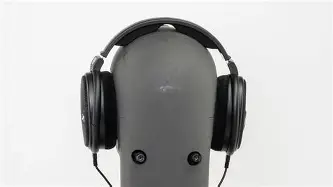
Genre Pairing
The HD 660 S is a genre specialist. It is the king of Small Group music. If your library consists of jazz quartets, vocalists, acoustic guitar, or string ensembles, these will likely be the best headphones you have ever heard. However, if your primary diet consists of modern Pop, Hip-Hop, or cinematic soundtracks, you might find the "lean" sub-bass and the "polite" treble a bit too boring for your tastes.
Comfort and Fit
Prospective buyers with larger heads should be prepared for the "Sennheiser Clamp." For the first week, you may feel like your head is in a vice. A common tip among enthusiasts is to extend the metal sliders fully and gently flex the headband (avoiding the plastic parts) to reduce the tension. Once the velour pads break in and the metal relaxes, they become "disappear on your head" comfortable, but getting there takes patience.
Real-World Use Cases
To better understand how the HD 660 S performs, we explored three distinct user scenarios during our month of testing: the professional editor, the casual audiophile, and the competitive gamer.
Find top-rated Audio & Headphones products at great prices.
Shop Amazon →The Professional Editor
In a studio setting, the HD 660 S acts as an incredible secondary monitor. Because the midrange is so forward and clear, it is easy to find artifacts in dialogue or balance the levels of a guitar track. The lack of treble "spike" means that you won't accidentally over-compensate by cutting too much high-end in your mix. However, the lack of sub-bass means you cannot rely on these for mastering the low-end of a kick drum or synth-bass; you will still need studio monitors or a subwoofer for that.
The Casual Audiophile
For the person who just wants to "feel the music," the HD 660 S offers a very emotional experience. There is a "sweetness" to the way it presents familiar tracks. It doesn't scream for your attention with aggressive detail; instead, it invites you to sit back and appreciate the timbre of the instruments. It is a very "forgiving" headphone, meaning it won't make your older, lower-resolution files sound terrible, unlike more analytical "revealing" headphones that can make 128kbps MP3s sound like sandpaper.
The Competitive Gamer
Gaming on the HD 660 S is a bit of a mixed bag. For "immersive" games like The Witcher 3 or Elden Ring, the small soundstage can make the world feel a bit less epic than it should. However, for competitive shooters like Counter-Strike or Valorant, the imaging is phenomenal. The speed of the driver allows you to hear the "crack" of a gunshot and instantly identify the angle, even if the enemy sounds like they are only five feet away from you. The comfort for long sessions is also a major plus for gamers.
Reflecting on a Month with the HD 660 S
After thirty days, the HD 660 S has revealed itself to be a master of subtlety. It is not a "wow factor" headphone. If you put it on for thirty seconds in a noisy electronic store, you might find it underwhelming compared to bass-boosted consumer models. But audio quality is often a slow burn. Over time, you begin to appreciate the lack of grain in the vocals, the way a cymbal crash decays naturally without being harsh, and the sheer comfort of the velour pads once they have molded to your face.
The transition from 300 ohms to 150 ohms was a smart move by Sennheiser, allowing this legendary sound signature to thrive in a world where the bulky desktop amp is becoming less common. It bridges the gap between the vintage "hi-fi" world and the modern "lifestyle" audio world without sacrificing the soul of what made the 600-series great.
Conclusion
The Sennheiser HD 660 S is a refined, technically capable, and exceptionally musical piece of equipment. It does not try to be everything to everyone. It ignores the trend of over-bloated bass and piercing highs in favor of a midrange-centric, smooth presentation that honors the source material. While it may lack the sub-bass for the bass-head and the "air" for the detail-obsessed, it settles into a beautiful middle ground that offers arguably the most natural-sounding vocals in its price bracket. For those who prioritize long-term comfort and a realistic, organic sound, the HD 660 S remains one of the most compelling options on the market today. It is a worthy successor to a legendary lineage, offering a more versatile and technically proficient window into your favorite music than ever before.